AsOneWishes.com

Friday, 11 January 2008

Growth Hormone Consequences

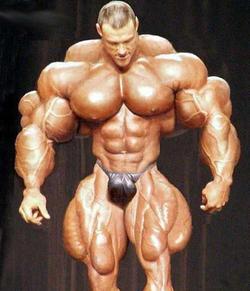
Many top athletes in virtually every sport that requires strength take Human Growth Hormone, or HGH. Since HGH is taken "under the table", virtually no studies have been done to track the consequences of its use in athletes. However, a study from Johns Hopkins shows that children who are growth hormone deficient and are given growth hormone for one year develop a progressive thickening of their heart muscle and of the blood vessels leading to their brains. They are 52 times more likely to have an atherosclerotic carotid plaque after one year. (The Journal of Clinical Endocrinology & Metabolism, Volume 92, 2007)

A very famous athlete died suddenly for no apparent reason. The autopsy showed that she had a huge heart that had outgrown its blood supply. HGH enlarges the heart without proportionately enlarging blood vessels that nourish it. HGH can make you a better athlete, but at a price. Athletes are so guided by their desire to win that they often are willing to ignore the consequences of the drugs that they take.

Thursday, 10 January 2008

The Latest Diet Books: Recipe for Success?

Before you spend your money on the latest diet book or weight loss gimmick, remind yourself that the ONLY ways to lose weight are:

1) Take in fewer calories,
2) Burn more calories, or
3) BOTH.

ALL of the popular diet books and programs, regardless of the "scientific" explanations they give, recommend menus that give you 1500-1800 calories or less per day. For most people this means you will be taking in fewer calories. You can lose weight on ANY OF THEM, but ask yourself: Is this a way of eating I can follow for the rest of my life? (If not, you will regain the weight as soon as you go back to your old eating habits.) And do the foods they tell me to eat supply all the nutrients my body needs? Most people can eliminate foods and food groups for a short time without any harm, but eventually you will create deficiencies if you do not eat a wide variety of foods, with lots of fruits, vegetables, whole grains, beans and other seeds. Don't believe that you can make up for what's missing with pills: a lousy diet with supplements is a lousy diet.

Your doctor may consider Surgery or prescription medications if you are critically obese, but these measures also require permanent diet changes and exercise for long term success.

If you are thinking of trying a supplement or spa treatment that promises to take off pounds with no effort, use the old rule: "if it sounds too good to be true, it usually is."

- Products that remove water (diuretics) or empty your colon (laxatives or colon cleansers) can cause you to drop several pounds in a day or two, but this is strictly temporary and does not remove any fat. You do not need to "cleanse" or "remove toxic waste products" to lose weight or for any other reason. Prolonged use of diuretics or laxatives can be dangerous.

- Most products that claim to "rev up your metabolism" or "burn fat" contain stimulants. Many plants contain stimulants, and you will get the same effect from "natural" or herbal weight loss products that you get from drinking lots of coffee or tea. Stimulants cause you to burn more calories and you will lose weight at first, but you need to take more and more as the days go by, and they can cause unpleasant, even dangerous side effects.

- There are no creams that will dissolve fat.

- Magnets placed over an acupuncture point don't cause weight loss.

- Eating collagen before you sleep does not make your body burn fat.

- Fat absorbers (chitin products) bind to small amounts of fat, but they cost about $35 to block the amount of fat in a Big Mac; in larger quantities they cause terrible gas and diarrhea.

- Pills or gimmicks that promises to get rid of cellulite are useless because cellulite doesn't exist. It's just plain fat.

- The only function of a body wrap is to make you sweat, and thus lose water. They claim you will lose 14 inches in 2 hours? So you lose 1/4" in the circumference of your legs through dehydration; they measure each leg, your waist, your hips, your arms, etc., total up the measurements and voila, you've lost 14 inches. You can get the same effect if you take your measurements before you go to sleep at night and after you wake up in the morning. Water loss is not fat loss. Here's their guarantee: "The inches will stay off unless you regain the weight." They fail to mention that OF COURSE you will regain the weight as soon as you take a drink of water.

Losing weight and keeping it off takes a permanent lifestyle change, involving both healthful eating and exercise. You'll find lots of help in the Nutrition section and the Fitness section of DrMirkin.com, and in the free Good Food Book

Wednesday, 9 January 2008

Bleeding Gums? Treat for Infection

One in 10 people suffers from periodontal diseases, characterized by bleeding in the gums when you brush your teeth, loosening of the teeth and damage to the structures that help the teeth stay in place.

These problems are caused most commonly by infections by three Gram-negative bacteria: Porphyromonas gingivalis, Bacteroides forsythus and Actinobacillus actinomycetemcomitans. The body responds to these infections by producing various cytokines (IL-1, IL-6, IL-8, TNF-alpha), inflammatory mediators (PGE2), and matrix metalloproteinases (MMP-2, MMP-3, MMP-8, MMP-9). Viruses, such as cytomegalovirus and Epstein-Barr virus) can also cause periodontitis. Conventional treatments for periodontitis aim to eliminate bacterial plaque by scrubbing, cleaning and prescribing antibiotics. Many dentists also prescribe anti-inflammatory drugs to decrease inflammation.

If your gums bleed when you brush your teeth or you have lose teeth, ask your doctor or dentist to try a short course of antibiotics for yourself and your spouse or partner. I often prescribe a combination of metronidazole 250 mg four times a day, and Biaxin 500 mg twice a day for one week. Other options include Zithromax, Dyanbec, doxycycline, minocycline, or a quinolone antibiotic. More on the link between gum disease and heart attacks

Monday, 7 January 2008

Weight Loss Hindered by Cold Weather

Many people gain weight during the cold months even if they exercise and watch what they eat. One reason may be that you burn fewer calories when you exercise in cold weather than you do when it's hot. The hotter it is, the more extra work your heart must do to prevent you from overheating. More than 70 percent of the energy produced by your muscles during exercise is lost as heat. So the harder you exercise, the hotter your muscles become. In hot weather, not only must your heart pump extra blood to bring oxygen to your muscles, it must also pump hot blood from your heated muscles to your skin where heat can be dissipated.

On the other hand, in cold weather, your heart only has to pump blood to your muscles and very little extra blood to your skin to dissipate heat. Your muscles produce so much heat during exercise that your body does not need to produce more heat to keep you warm. So your heart works harder and you burn more calories in hot weather. This information should not discourage you from exercising when its cold, because staying in shape is a year-round proposition. However, it may help to explain why so many people find the pounds creeping on in the wintertime, even when they stay active. More on weight loss

Friday, 4 January 2008

Cold Hands: Don't Just Suffer

If your fingers turn white and start to hurt when you're out in the cold, you may have a condition called Raynaud's phenomenon. On exposing your fingers to cold, the blood vessels close, skin turns white and their temperature drops. When the temperature drops to 59 degrees, your body tries to save your skin by opening the blood vessels and the skin turns red and starts to itch and burn. If you warm your hands at this point, your skin will not be damaged, but if you do not get out of the cold, the blood vessels in your hands can close and the temperature in your hands can drop to freezing, resulting in frostbite.

People who have Raynaud's phenomenon have blood vessels in their hands that do not open when the skin temperature reaches 59 degrees. Several diseases, smoking or using vibrating equipment can cause Raynaud's phenomenon.

Wear two or more layers of gloves and mittens. When your fingers feel cold, swing your arms very rapidly about your shoulder with your elbow straight. This will drive blood, like a centrifuge, into your fingers and warm them.

The blood pressure drugs called calcium channel blockers, such as Nifidipine, can help to treat and prevent Raynaud’s phenomenon . Another option is nitroglycerin ointment, a prescription medication that is used to treat angina. When applied to the forearm, it opens blood vessels leading to the hands. Check with your doctor to see if either of these medications would be appropriate for you. More on frostbite

Thursday, 3 January 2008

Oveweight Children Risk Heart Attacks as Adults

Two new studies in the same issue of the New England Journal of Medicine show the probable impact of childhood obesity on heart attack rates. The first study, based on annual height-and-weight measurements in some 275,000 Danish schoolchildren, followed their health after age 25. Researchers found that being overweight in adolescence predicts higher risks for heart attacks in later life. The present high rate of obesity in adolescence is projected to increase the prevalence of obese 35-year-olds in 2020 to a range of 30 to 37 percent in men and 34 to 44 percent in women.

The second study predicts that heart attack rate will increase between 5 percent and 16 percent by 2035, with more than 100,000 excess cases of coronary heart disease attributable to the epidemic of obesity. Obesity in childhood increases risk for coronary heart disease during adult years. Efforts to regulate advertising of junk food, change farm subsidies, and provide funding for decent lunches and regular physical activities at school can help to reverse this trend. Journal references; more on healthful eating for children

Tuesday, 1 January 2008

Why Exercise Protects Your Memory: New Research

Recent research shows that a regular exercise program can help to prevent some of the loss of memory that comes with aging. A part of your brain called the hippocampus is the control station for memories that you store in other parts of the brain. Another brain structure called the prefrontal cortex is the central station that assembles data from other parts of your brain when you want to recall something from your past. Aging causes the brain to shrink and you lose synapses that transmit messages from one nerve to another.

Exercise causes the brain to produce a substance called Brain Derived Neurotropic Factor (BNDF) that strengthen old synapses and causes new one to grow. Researchers used MRIs of their human subjects to show that an exercise program of an hour a day, four days a week for three months caused new neurons to grow in the hippocampus. Several previous studies showed that exercise enlarges the hippocampus in rats and doubles or even triples the rate of the formation of new nerves. However, one way that rats differ from humans is that most of them like to run and need no encouragement to spend several hours a day on a treadmill.

There is also emerging evidence that physical activity may be protective against neurological disorders, including Alzheimer's and other forms of dementia, Parkinson's disease, strokes and spinal cord injuries. If you are not a regular exerciser, check with your doctor and get started. Journal reference; more on preventing memory loss with exercise; more on Alzheimer's

ping blog

Step 1
Blog URL:


Blog Title (optional):


Blog RSS Feed (optional):


I agree with terms of service.

Step 2
Copy the following code and put it on your blog/site to help our blog ping tool track your submission (Need help?):
;

 
Design by Free WordPress Themes | Bloggerized by Lasantha - Premium Blogger Themes | Best Buy Coupons